
How One Superintendent Built a Shared Identity from the Ground Up


When Dave Parker took on the role of Superintendent in the Forest Grove School District, he didn’t arrive with a predetermined, rigid plan. He came with experience, curiosity, and a real desire to understand the community.
OBJECTIVES
- Figure out how to turn community input into clear direction for the whole district.
- Make sure our identity work actually connected strategy, communication, and culture.
- See how listening early and building relationships could strengthen leadership.
RESOURCES
Starting With Questions
A chance meeting at a coffee shop turned into a conversation about the work we do at Inflexion. That chat sparked Dave’s interest in exploring identity-based engagement for his district. Instead of jumping straight into traditional strategic planning, he wanted to start by asking questions and really listening.
He was drawn to the idea of maxims. Simple, guiding statements grounded in what the community actually values. Maxims aren’t just a framework. They help highlight what matters most to students, staff, and families.
Dave brought his leadership team together to figure out a path that was inclusive and transparent. The goal wasn’t just to define the district’s values. It was to turn them into a promise everyone could get behind. What started as his own learning journey quickly became something everyone got involved in.
What are maxims?
Maxims are statements that act as a school’s core drivers to equip and empower every student to pursue their passion, interests, and aspirations. They are used to highlight the areas of hidden strength already within a school. They can also be used as aspirational statements to reinforce the promises your school makes to the community. Maxims should be displayed widely and built into the daily curriculum, as a whole or in part, to familiarize your students and staff with them and embed them into the school culture.
Making Identity Part of the Strategy
As the process unfolded, the Inflexion team helped facilitate conversations with district staff. We looked at how maxims could align with strategic goals and reflect Forest Grove’s culture. Staff who were initially skeptical started to see the value of grounding decisions in community voice.
This wasn’t just about swapping out a mission statement. It was about turning abstract statements into real commitments and making identity central to everything the district does.
Listening Everywhere
From day one, Dave focused on relationships. He shared what he was learning about maxims, encouraged questions, and made space for all voices—even the hesitant ones. With Inflexion’s support, his leadership team participated in the engagement activities firsthand so they could understand what staff and families would later be asked to do.
Start with the people, start with what they know.
-Lao Tzu
He showed up in the community, too—at school events, family nights, and even a community barbecue, where he helped cook, meet people, and listen. His presence wasn’t performative; it came from a genuine desire to connect, which naturally built trust.
The district used online surveys and in-person activities to gather input from more than 3,000 students, families, and staff. One activity, “If Your School Was an Animal,” became a real turning point. Some leaders were skeptical at first, but once they saw how the metaphor sparked conversation, participation grew.
These steps made the maxims feel grounded in real relationships, not just data. When the language emerged, people recognized themselves in it and felt ownership of where the district was headed.
Turning Insight into Action
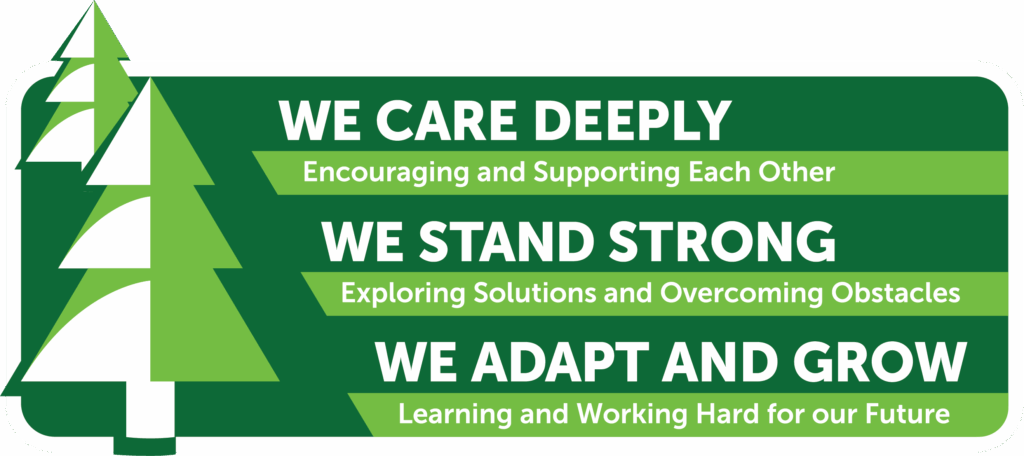
With all that input, the Inflexion team synthesized the feedback into a set of districtwide maxims—short, easy to remember phrases that capture what the community values about teaching, learning, and student success. These maxims became the foundation for a district promise: a clear statement of what Forest Grove stands for and commits to deliver.
Dave and his team didn’t stop at visioning. They wove the maxims into the strategic plan through 2028, customized visuals for individual schools, and kept the core commitments consistent across the district. The result: a values-driven framework that helps guide decisions and keeps everyone aligned.
The refreshed branding, designed alongside the identity work, echoed the district’s Pacific Northwest forestry roots. The new logo and materials weren’t just cosmetic—they showed a renewed commitment to clarity, connection, and purpose.
Lessons From Dave
Some takeaways for school leaders:
- Start with listening. Dave came with questions, not a finished plan.
- Engage early and often. Being present in schools and community events built trust and encouraged participation.
- Make identity actionable. Turning beliefs into a shared promise linked values to real decisions and practices.
- Lead through uncertainty. By modeling curiosity and openness, Dave turned skepticism into ownership.
Today, Forest Grove’s maxims and district promise guide how the district communicates, plans, and engages. They’re visible in buildings, on the website, and in everyday conversations. More importantly, they reflect a community that paused to ask who it is—and what it’s willing to stand for.

This work by Inflexion is licensed under Creative Commons Attribution-NonCommercial-ShareAlike 4.0 International


Stay in the Loop
Subscribe to Our Newsletter








Responses